

DeFi Security Starts Before the Transaction: What Rabby Simulation Can—and Cannot—Tell You
Zoë Routh
One of the most dangerous assumptions in DeFi is that a transaction is safe because the wallet displays no obvious error. In reality, many losses occur when a transaction executes exactly as designed: a token approval is granted to an unwanted spender, an unfamiliar contract receives control over assets, or a swap returns far less value than the user expected. The problem is not simply that users click too quickly. It is that blockchain transactions are difficult to interpret, and conventional wallet prompts often describe technical actions without explaining their economic consequences.
That is why transaction simulation has become an important security layer for decentralized applications. A wallet such as Rabby can attempt to preview what a transaction is likely to do before it is signed. For US-based DeFi users moving between decentralized exchanges, lending markets, bridges, and NFT platforms, this changes the central question from “Can this transaction be submitted?” to “What state will my wallet and the protocol likely be in afterward?” That is a better question—but it is not the same as receiving a guarantee of safety.
The common myth: a wallet can make a risky protocol safe
A browser wallet is an interface and signing tool, not an insurance policy. It can help a user inspect a transaction, identify suspicious approvals, and compare expected changes with the intended action. It cannot repair a malicious protocol, reverse an irreversible transfer, or determine with certainty whether an anonymous team will behave honestly tomorrow.
This distinction matters because security failures in DeFi often happen across several layers. The browser extension may be authentic, while the website connected to it is a phishing copy. The website may be genuine, while its smart contract contains a vulnerability. The contract may be technically sound, while the user approves an asset amount that is broader than necessary. Simulation can reveal some of these problems, particularly those visible in the transaction’s execution path. It cannot eliminate risks that are outside that path.
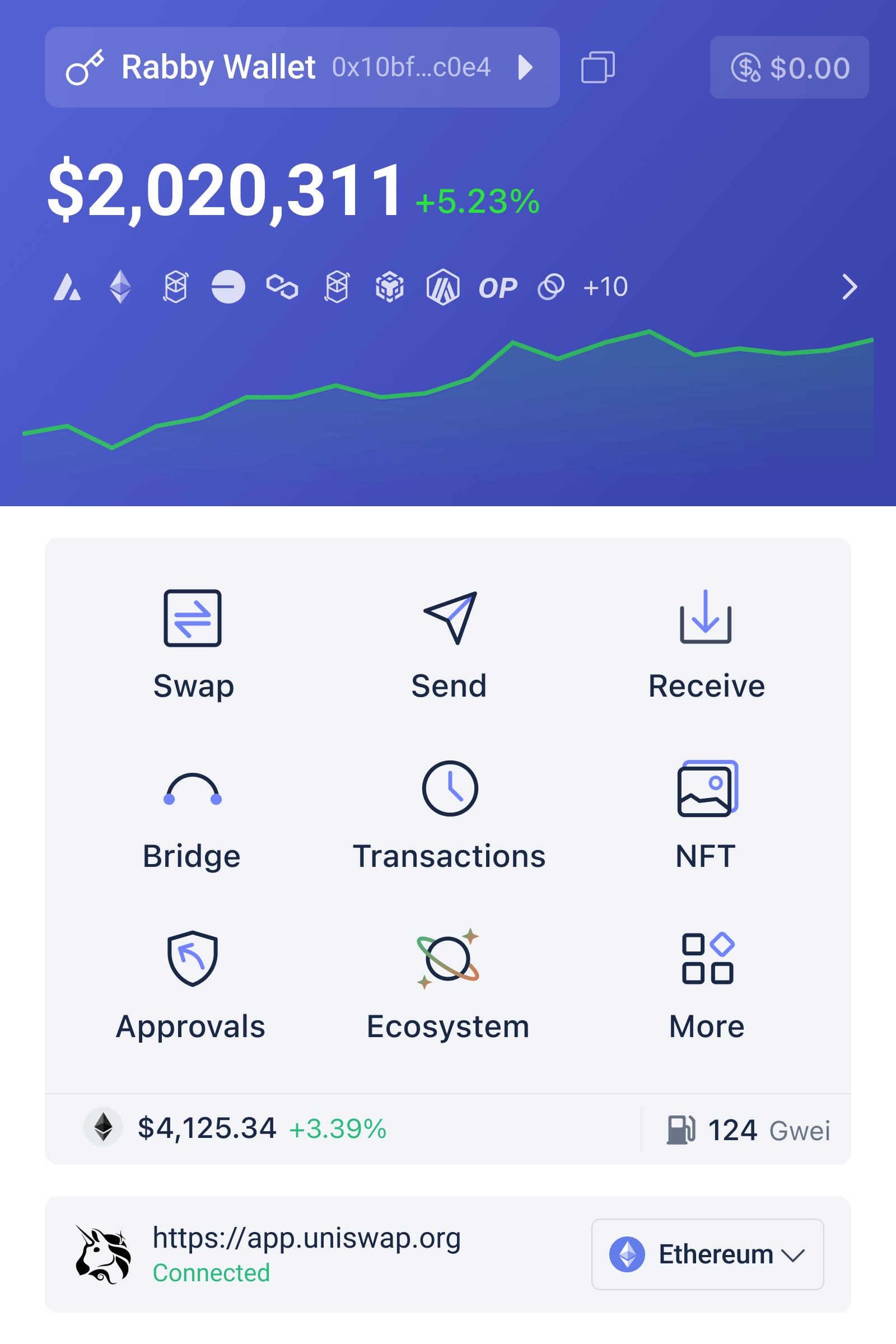
Users should therefore treat the rabby extension as one component in a broader control system. Downloading it through a trustworthy source, checking the browser’s publisher information, and keeping the extension updated are basic but essential steps. A fraudulent extension can imitate familiar wallet language while capturing seed phrases or redirecting signing activity. No simulation feature can protect a user who has already surrendered the recovery phrase.
How transaction simulation works in practical terms
Most DeFi actions begin as a proposed transaction. A decentralized application prepares instructions for a smart contract, including the contract address, method, parameters, token amounts, and sometimes a fee limit. The wallet then asks the network—or a supporting simulation service—to execute those instructions in a provisional environment. The blockchain state is not permanently changed during this preview. Instead, the system estimates what would happen if the transaction were submitted under the relevant conditions.
The useful output is not merely a success or failure label. A good simulation may show assets leaving the wallet, tokens arriving, approvals being created, contract interactions occurring, and warnings about unusual behavior. It can also help distinguish a normal multi-step action from a transaction that quietly grants broad spending authority. For example, a user intending to swap one stablecoin for another should be able to ask whether the expected stablecoin arrives, whether an unrelated token is transferred, and whether a new approval remains active afterward.
The deeper security benefit is translation. Smart contracts operate through function calls and state changes; users think in terms of buying, lending, withdrawing, or minting. Simulation narrows the gap between those two representations. It does not make the underlying code simple, but it can make the consequences more legible before the signature is given.
Why simulation is valuable but not definitive
Simulation has a hard boundary: it is conditional on the state and assumptions used for the preview. DeFi markets can change between simulation and confirmation. Prices may move, liquidity may disappear, a block may alter a protocol’s state, or a contract may depend on information that is difficult to reproduce precisely. A transaction that appears acceptable in one state may execute differently a moment later.
There is also a distinction between technical execution and economic quality. A simulation might correctly show that a swap sends one token and returns another. It may not tell the user whether the exchange rate is sensible relative to the market, whether a temporary price impact is excessive, or whether the protocol’s governance structure creates a longer-term risk. A transaction can be technically successful and financially poor.
Another limitation concerns malicious contracts that deliberately obscure their intent. A contract may produce ordinary-looking outputs while retaining a dangerous approval, relying on later interactions, or using permissions that become harmful only under a particular condition. Simulation can improve visibility, but it depends on what the analysis recognizes and how clearly the result is presented. The absence of a warning is not proof of benevolence.
These limits do not make simulation ineffective. They define its proper role. It is best understood as a pre-signing inspection and anomaly-detection layer, not as an autonomous security verdict. The sensible response to a warning is not always “cancel,” and the sensible response to no warning is not always “proceed.” Context remains necessary.
Approvals are the overlooked source of recurring risk
Many users focus on the immediate transfer and overlook token allowances. An allowance is permission for a smart contract to spend a specified token balance on a user’s behalf. Depending on the approval design, that permission may cover only the current amount or a much larger amount, sometimes effectively the user’s entire balance of that token.
This creates an important asymmetry. A one-time swap may look harmless, but an overly broad approval can remain useful to a compromised or malicious contract later. The risk is therefore not limited to the moment of signing. It is a continuing authorization that changes what another contract may do in the future.
A careful user should inspect whether an approval is necessary, which contract receives it, and whether the amount is proportionate to the intended action. Revoking unused approvals can reduce exposure, although revocation itself is another on-chain transaction with a fee and its own signing risk. Limiting approvals may also introduce inconvenience, and some applications require repeated approvals. This is a genuine trade-off between operational friction and reduced permission scope—not a problem with a cost-free solution.
A practical framework for deciding whether to sign
Before confirming a transaction, separate four questions that are often collapsed into one. First, is the application and domain authentic? Second, is the destination contract the one the user intended to interact with? Third, do the simulated asset changes match the economic action? Fourth, are any permissions broader or more durable than necessary?
This framework is more useful than relying on a single green indicator. If the site is unfamiliar, pause even when the simulation looks normal. If the contract address is unexpected, investigate it rather than trusting the application’s branding. If the outcome shows a loss of assets that the user cannot explain, do not sign. If the transaction requires an unlimited approval for a small, one-time action, consider whether a narrower allowance or a separate wallet is appropriate.
For higher-value activity, compartmentalization adds another layer. A wallet used for experimentation should not hold the same assets as a wallet used for long-term savings. A hardware wallet can reduce exposure to some classes of malware, but it does not make a deceptive transaction safe; the user can still approve the wrong action on a secure signing device. Security improves when controls are layered rather than when one tool is treated as decisive.
What to watch as wallet security develops
The likely direction of DeFi wallet design is toward richer explanations of intent: not just which contract is called, but how balances, permissions, and positions may change. If these tools become more accurate and easier to understand, they could reduce a major source of user error. The strongest systems would explain uncertainty as well as confidence, showing when a result depends on volatile state or incomplete information.
The open question is whether better interfaces will create better decisions or simply encourage faster clicking. A warning that is too vague becomes background noise; a warning that is too frequent trains users to dismiss it. Future usefulness will depend on calibration, readable explanations, and the ability to distinguish a routine protocol interaction from an unusual permission request. Users should watch not only for new features, but for whether those features expose assumptions and limitations instead of hiding them.
Frequently Asked Questions
Does transaction simulation guarantee that a DeFi transaction is safe?
No. It estimates likely execution and can reveal unexpected transfers, approvals, or contract behavior, but it depends on the simulated blockchain state and available analysis. It cannot guarantee that a protocol is honest, secure, economically worthwhile, or safe after conditions change.
Why should I care about token approvals when I am only making a swap?
The swap may require a contract to spend tokens on your behalf. If the approval is broader than necessary, that permission can create continuing exposure after the swap is complete. Review the spender and allowance, and consider revoking permissions that are no longer needed.
What is the safest way to install a browser wallet extension?
Use an authentic distribution source, verify the publisher and extension details, and avoid links sent through unsolicited messages or advertisements. Never enter a recovery phrase into a website or extension installation page. After installation, test unfamiliar applications with a small amount rather than immediately connecting a wallet holding significant assets.
DeFi security is not achieved by finding a wallet that removes judgment from the process. It is achieved by making judgment better informed. Transaction simulation helps because it exposes the likely consequences of a signature before those consequences become permanent. Its real value appears when users combine it with domain verification, approval discipline, wallet compartmentalization, and a willingness to stop when the transaction does not make sense. The most secure click is still the one made only after the user understands what the click authorizes.